
yangchhar
In a kingdom that measures progress by happiness rather than GDP, travellers often leave with a quiet revolution in their hearts.
In 1972, the fourth King of Bhutan, Jigme Singye Wangchuck, declared that Gross National Happiness was more important than Gross Domestic Product. The world laughed, politely. Fifty years later, the world is reconsidering.
Gross National Happiness is not a poetic abstraction. It is a governing framework — one that asks a question no other national policy does: does this decision make people's lives better?
The Nine Pillars
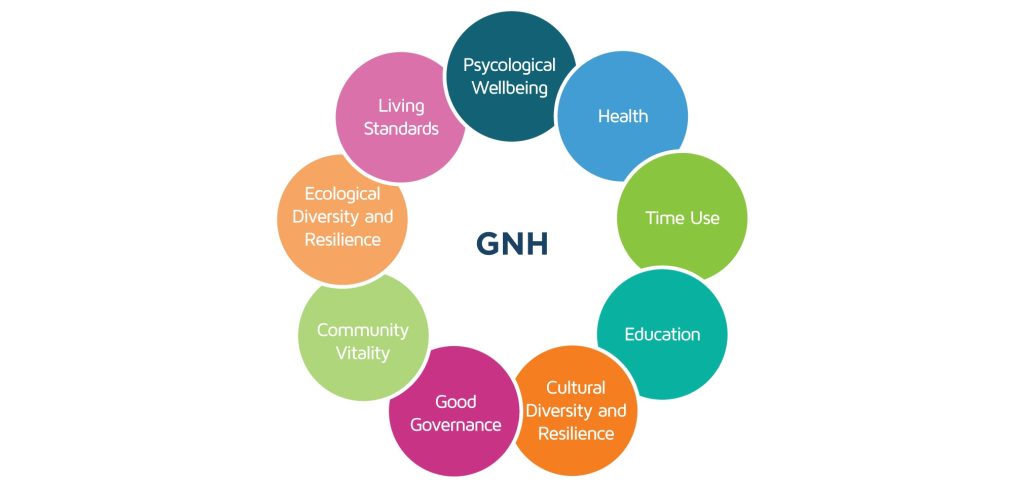
The Gross National Happiness (GNH) framework is defined by nine essential domains: Psychological Well-being, Health, Education, Time Use, Cultural Diversity and Resilience, Good Governance, Community Vitality, Ecological Diversity and Resilience, and Living Standards.
These are not merely aspirations; they are the functional lenses through which every Bhutanese policy—from infrastructure and education to tourism—is evaluated. By balancing economic growth with social and environmental harmony, this framework ensures that development remains sustainable, equitable, and centered on the holistic well-being of the nation.
What Travellers Learn
Our guests consistently describe the same experience: arriving in Bhutan with the restlessness of modern life and leaving with something quieter. Part of this is the landscape — the clean air, the unplugged valleys. But most of it is the people. Bhutanese citizens, by and large, are not performing contentment. They have built it into the structure of how they live.
Bhutan’s high-value, low-impact tourism policy means your journey here is not incidental to the country’s wellbeing — it is part of it. The Sustainable Development Fee you pay is invested directly in free healthcare, free education, and environmental conservation. Travel, here, is genuinely reciprocal.