
yangchhar
Chimi Lhakhang: Where Ancient Blessing Meets Living Faith
My friend Kinley has a nephew because her sister once made the walk to Chimi Lhakhang. She told me as though it were the most obvious thing in the world.
“We wouldn’t have him if she hadn’t gone to Lobesa that October.”
Tenzin is fifteen now, studying in Thimphu and completely unaware of how close he came to never existing. His parents had been married for six years. Six years of trying. Six years of quietly saying “not yet” to well-wishers, watching neighbours carry babies home, going still in the way that couples go still when something important stays missing.
A trusted family elder eventually said what everyone had been thinking: visit Chimi Lhakhang. Take the walk. Ask.
“People always want to know if it’s real,” Kinley told me. “I just pointed at my sister. Make up your own mind.”
The Walk to Lobesa
The couple visited in October. The path from Sopsokha village winds through farmhouses painted with the same image, again and again — the divine symbol of Drukpa Kuenley, Bhutan’s beloved saint. By the time they reached the temple, they had stopped being surprised by it and started feeling something quieter. Something like respect.
Inside the monastery, a monk received them. He blessed her with the sacred wooden phallus — Drukpa Kuenley’s relic, the keeper of the temple’s power — touching it to her head. He said some prayers and smiled. No waiting list. No ceremony beyond that simple, ancient gesture. They walked back to the village that afternoon, barely speaking.
Nine months later, a son was born. Life calling to life.
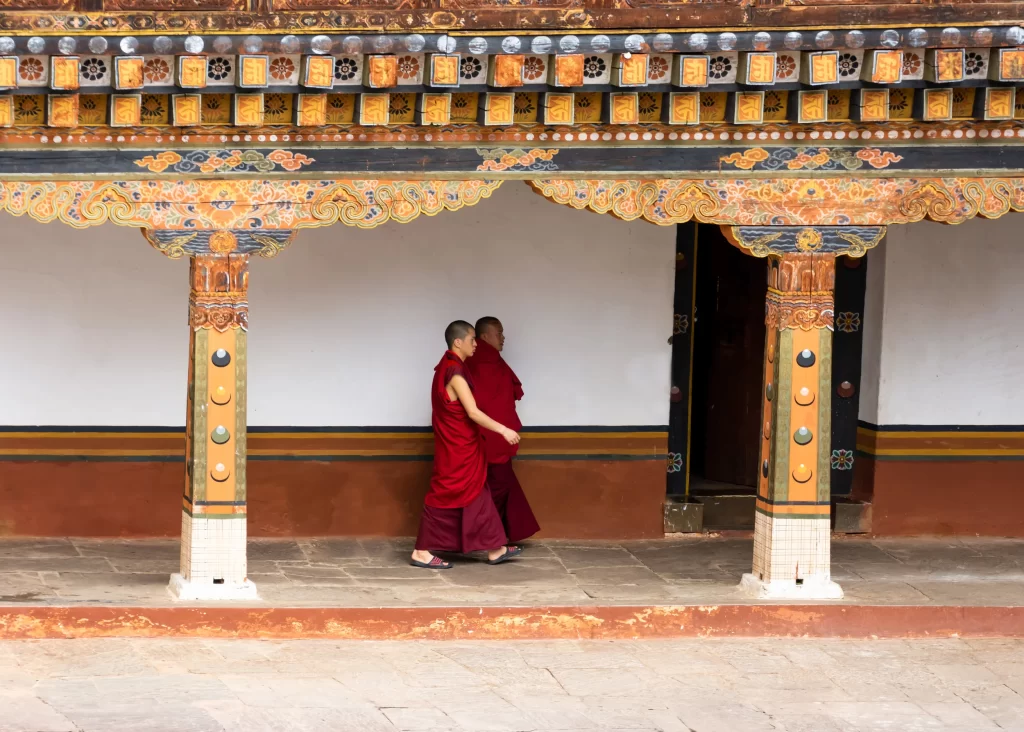
Who Was Drukpa Kuenley, the Divine Madman?
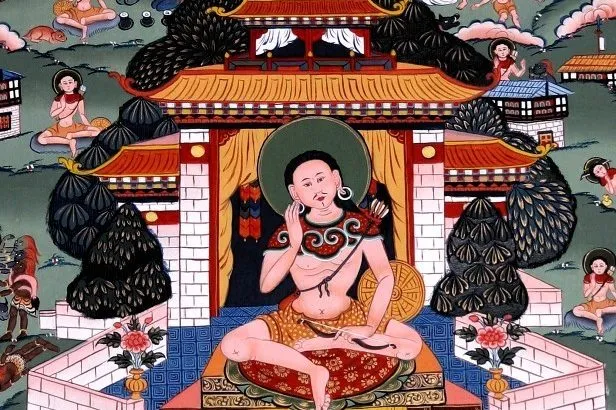
Born in Tibet in 1455, Drukpa Kuenley was a Tibetan Buddhist master who rejected monastic convention in favour of direct, often startling wisdom. He wandered the Himalayas barefoot, subdued demons by converting them into protectors, and awakened the spiritually complacent through laughter, poetry, and unconventional means.
It worked. He is venerated across Bhutan as the saint who used shock and humour to rouse people from spiritual sleep. He believed that ordinary human life — raw, flawed, embodied — was itself the sacred path.
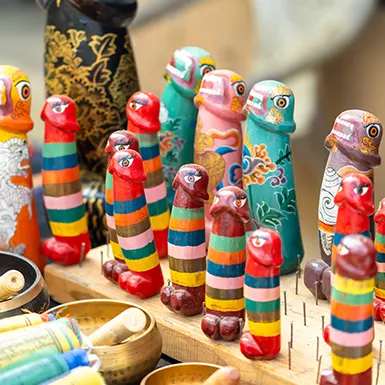
His symbol, the phallus, is painted on walls across Bhutan: hung above doorways, carved into wood, woven into prayer flags. It is not lewdness. It is a declaration that creation itself is holy.
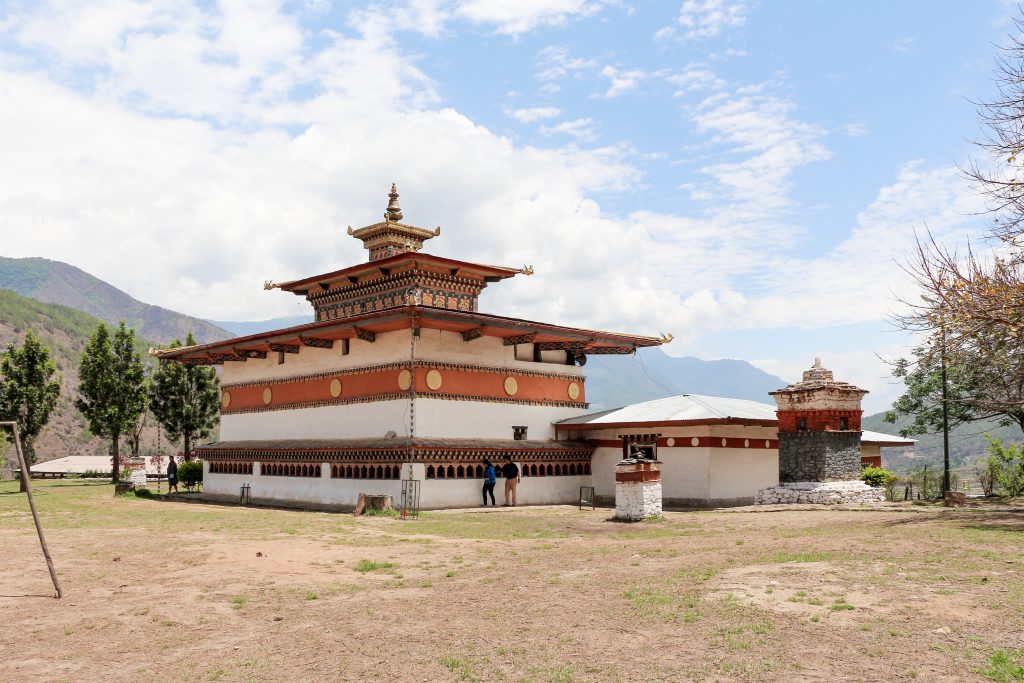
When Drukpa Kuenley came to the Punakha Valley, he drove out the demons dwelling on a small, round hill and declared it a place of life. In 1499, a monastery was built there in his honour. The wooden phallus kept at Chimi Lhakhang represents his energy — fertility in its deepest sense. To receive its blessing is to align oneself with that creative force.
People have come ever since to ask for the one thing no doctor, no prayer, no amount of waiting had yet given them: a child.
Planning Your Visit to Chimi Lhakhang
Location
Lobesa village, Punakha District — approximately 1.5 hours from Thimphu by road.
The Walk
A gentle 20–30 minute trail from Sopsokha through rice paddies and farmhouses. Flat terrain, suitable for all fitness levels.
Best Time to Visit
October to December and February to April offer the clearest skies and most pleasant walking conditions.
What to Expect
A monk blesses visitors with the temple’s wooden phallus relic. The ritual is open, welcoming, and conducted with great care. Modest dress is respectful — shoulders and knees covered.
Combine With
Most visits are paired with Punakha Dzong, one of Bhutan’s most magnificent fortresses, just 20 minutes away.
FAQs
What is Chimi Lhakhang?
Chimi Lhakhang is a 15th-century Buddhist monastery in Lobesa, Punakha District, Bhutan. It is dedicated to Drukpa Kuenley, known as the Divine Madman, and is widely visited by couples seeking a blessing for fertility and children.
Is Chimi Lhakhang only for couples trying to conceive?
No. Many visitors come out of spiritual curiosity, cultural interest, or as part of a broader Bhutan itinerary. The temple is open to all, and the blessing is offered to anyone who wishes to receive it.
How do I get to Chimi Lhakhang from Thimphu?
Drive approximately 70 km to Sopsokha village in Punakha District (around 1.5 hours), then walk 20–30 minutes through farmlands to the temple. Most visits are arranged as part of a guided Bhutan tour.
What does the blessing involve?
Chimi Lhakhang is a 15th-century Buddhist monastery in Lobesa, Punakha District, Bhutan. It is dedicated to Drukpa Kuenley, known as the Divine Madman, and is widely visited by couples seeking a blessing for fertility and children.
When is the best time to visit Bhutan and include Chimi Lhakhang?
October to December is ideal — the weather is crisp and clear, rice harvests are underway in Punakha, and the valley is at its most beautiful. February to April is also excellent, with rhododendrons in bloom.